August 28, 2011
By: Colin Low
Category: Announcements
 It’s easy to keep mum on a blog called Against the Hype. When you only hunt down movies that critics you trust have been raving about, it’s hard to go off consensus. When you otherwise discover movies you have no strong frame of reference to discuss, as I have been doing for the past year in arthouses around Chicago, it’s presumptuous to mouth off without first wondering what kinds of viewing practices you’re failing to adopt to charitably appreciate them.
But I’m breaking my long silence, because this is the first year I’m looking forward to the Singapore International Film Festival after having been broken-in to the arthouse realm, and the line-up is mouthwatering. Kudos to the festival programmers!
Below the jump, you’ll find the current list of movies to which I intend to buy tickets, once the box office has opened on Sept 2. I’ve basically picked each movie for at least one of three reasons:
- It’s been nominated for Best Director at the festival’s Silver Screen Awards competition, an endorsement I trust handily more than Best Film;
- It hails from South Korea, whose country’s auteurial output I’ve been unjustifiably enamoured with ever since watching Lee Chang-dong’s Poetry and (more importantly) Bong Joon-ho’s Mother last year; or
- It’s been directed or acted in by filmmakers that I’m intrigued to know more about, namely Werner Herzog and Wim Wenders in their 3D documentary showdown, as well as French acting goddess Catherine Deneuve.
So please:
- Check out the SIFF schedule yourself and think about which movies you’d like to watch. I’m already getting a 10% discount for buying tickets to this many movies, so if you’d like to hop on, let me know before this Friday.
- Let me know if there are any movies I’m not seeing that you think I should! Sadly, there are some juicy choices that I’ll have to miss, either because I can’t be in two places at once, or because I’ll be flying back to Chicago for my sophomore year in the wee hours of Sept 23.
- Stay tuned. I’ll have more to say about the SIFF, now that I’ve essentially defibrillated this blog…
Read the rest of this entry →
Comments (8)
April 13, 2011
By: Colin Low
Category: Capsuled Thoughts
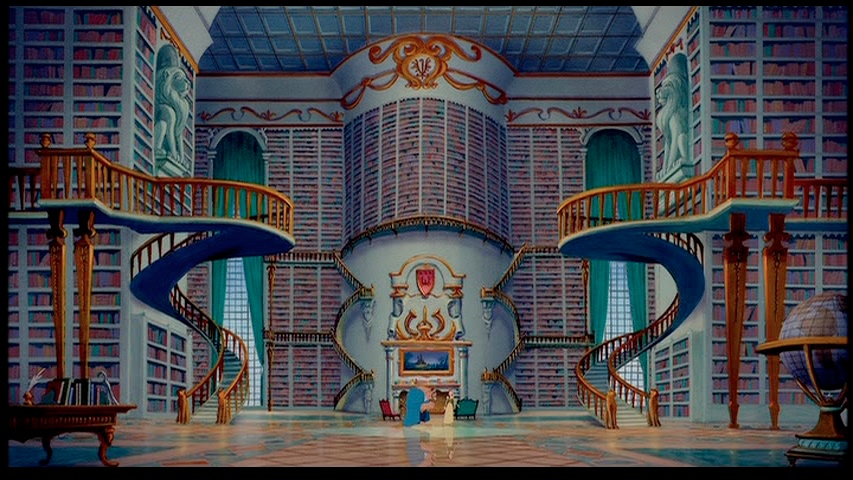
If there’s any doubt what Belle’s life as a princess will be like after the credits have rolled, this shot provides the answer. “Far-off places, daring swordfights, magic spells, a prince in disguise”: she’s been there, and more besides. Is there another movie—an animated children’s film, no less—that has so compellingly explored the complex emotional territories of filial self-sacrifice, mob hysteria, the politics of mental illness, and full-blown romantic despair? One imagines Belle will now be content if everything else were to be found just in books. I know I would be, if I had a library like that.
Comments (2)
April 06, 2011
By: Colin Low
Category: Capsuled Thoughts
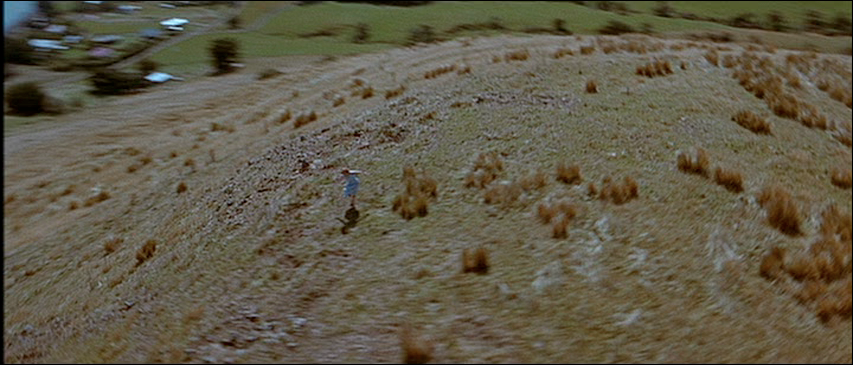
Back in 1994, Peter Jackson already showed a great facility for having his camera swoop around the vistas of New Zealand. The above swirling shot of Heavenly Creatures might well recall the iconic opening of The Sound of Music—until we hear Juliet Hulmes’ bawling seep into the soundtrack. Using a sunny, animated landscape shot to indicate a tormented interior? Yowza! Indeed, no screencap can do justice to the persistence with which Jackson and his editor Jamie Selkirk keep the camera alive and moving throughout Heavenly Creatures, by means of trailing the wild swoops, fancies and injustices in the minds of its adolescent leads. Come back to us, Peter Jackson!
Comments (4)
March 23, 2011
By: Colin Low
Category: Full Essays
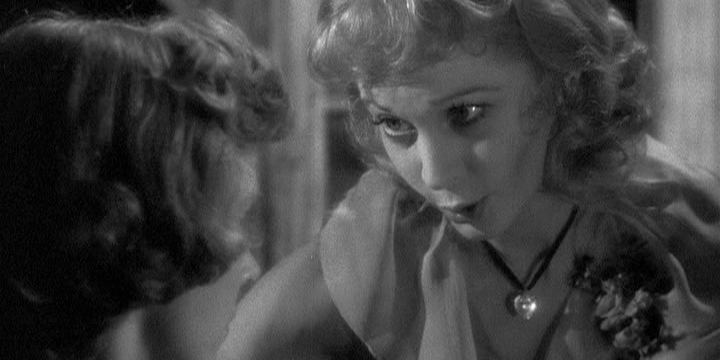
I’ve tried. I swear I’ve tried. But after numerous repeated viewings, I still look upon Vivien Leigh’s Blache DuBois in A Streetcar Named Desire and wonder what gains the feisty, ever resourceful Scarlett O’Hara thinks she’ll get out of posturing so self-consciously and pitching her voice around the range of a twittery coo. It’s a testament to Leigh’s legendary performance as that other Southern belle in Gone with the Wind that it haunts this role too. Yet Leigh is so much more stiffly heightened here, even while keeping within a similar vein of theatricality, that we can’t quite say she’s approaching Blanche as an aged, more destitute remainder of who Scarlett once was either (though now that I would’ve liked to see).
Read the rest of this entry →
No Comments →
March 16, 2011
By: Colin Low
Category: Capsuled Thoughts
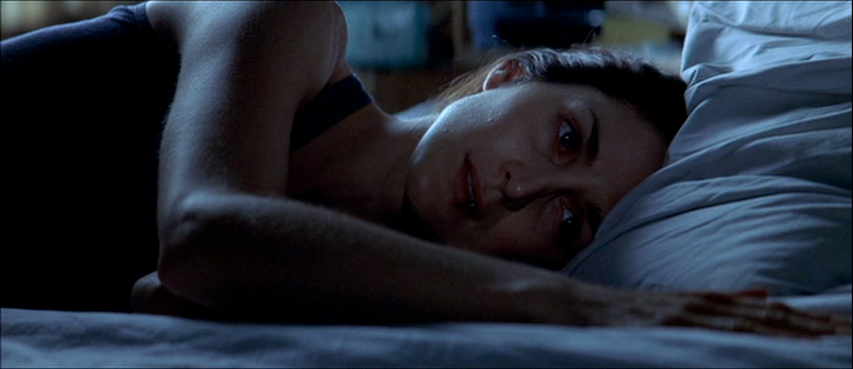
These days, director Christopher Nolan is justifiably esteemed for risking his blockbusters on such nominally cerebral material as Inception, The Dark Knight, and The Prestige. But for me, Nolan’s breakout success Memento—today celebrating the tenth anniversary of its release—is still the movie that best corrals his recurring strengths and weaknesses into one taut package. I’d go further to advise fans and skeptics alike to catch the chronological-order cut of the movie (available on the Limited Edition DVD), which shores up how duly the movie’s meticulous construction serves its high-concept premise, its reliance on copious exposition and its motivating dead lovers—all tropes that have since dogged Nolan’s work, often for the worse.
But more than that, the chronological-order cut also offers a crucial look at how editing can utterly change our conception of an actor’s craft, and a writer-director’s rounded compassion. The above shot, my pick for Nathaniel Roger’s Hit Me with Your Best Shot series, offers the gist of my elations and problems with Memento. I’ve heard somewhere that, coming off the back of The Matrix‘s success (my review), Carrie-Anne Moss’ signing on to Memento was what led to the project being green-lit. Funny that we haven’t seen much of her since, while the two movies that remain her most prominent cultural legacies are still going strong a decade later. And they both reduce her to token plot points! That’s irony for you.
Read the rest of this entry →
Comments (5)