Against The Hype

movies smarted up, theory dumbed down
Subscribe

Archive for the ‘Movies’

Review: The Hurt Locker

March 10, 2010 By: Colin Low Category: Capsuled Thoughts

So the ‘09 Oscar season has come and gone, and I’ve managed to blog (sporadically, I know) through a full calendar year without making so much as a post on it. See, while I appreciate that the Academy Awards help to mark the passing of time in the movie-going world, I’m not obsessive enough about them—unlike certain bloggers I admire, bless ‘em—to bother watching nominated movies (or even movies merely hyped for a nomination) that I don’t expect to at least give me a good time. Up to now I’ve managed to avoid The Blind Side, Crazy HeartInvictus, The Last Station, The Lovely Bones, Nine, A Serious Man, A Single Man, Up in the Air and The Young Victoria, and there’s nothing I’ve heard about those movies beyond their Oscar hype that remotely compels me to them.

What’s a blogger writing Against The Hype to do? Well, to start with, I’ll be happy to point out that this year, the Academy did anoint a movie that, aesthetically and politically, couldn’t deserve it more. It’s now enjoying a re-run in local theatres, so catch it while you can!

Review: The Hurt Locker

My two theatrical experiences of this latest Best Picture winner were dramatically different, even opposing. The first time around, having just finished my two-year stint in the army, my sympathies lay with sergeant Sanborn (Anthony Mackie), who is tasked with providing cover against potential snipers and bomb-igniters. Both he and I couldn’t stop being frustrated at the wilful bravado of his new bomb-defusal team leader William James (Jeremy Renner), who strutted through potential killzones, held standoffs against cars, and threw away his comms headset at critical junctures, keeping his entire team in mortal risk. So despite a thoughtful gesture towards Sanborn in the sniper scene, I watched with a chilly disposition as James took a turn for the utterly reckless, imagining himself as some Bourne Supremacy-style renegade in two later scenes. Those two scenes, and the ones right after, are clearly positioned to “teach James a lesson”, so I couldn’t stand that The Hurt Locker’s final scenes seemed eager to regress James into soldierly rock-stardom, with the music to match. Even if this was intended as irony, I felt aggrieved at the thought of siccing James on Sanborn’s wretched successor for a whole year. I left the theatre with mixed feelings, and then came online to discover a baffling ton of buzz for Renner’s performance, compared to almost none for Mackie. What a world!

After it re-opened last month, I returned to The Hurt Locker, eager to tether my perspective to James’ and see if that yielded a response closer to consensus. Lo, I found myself taking quickly to the bugger’s sexual charisma, as he grunted for help in removing the mortar-shield from his window, and flashed that rogue grin. By abandoning any notion of “gritty, realistic soldiering in Iraq” and instead tracing the movie’s eagerness to study James as its action star, I settled into a far more comfortable place from which to watch James dive into each new scenario that arose, and then to follow him down his self-inflicted missions. This time I caught, with full force, James’ sentimental logic and muffled desperation within those missions, or in the box of parts from bombs that almost killed him which he keeps under his bed, or in the world of difference between shoving a handgun into an Iraqi’s temple and racing against inevitability to unshackle another from his cage of bombs. The last shot of James, opaque in his bombsuit, transmuted from outraging to bleakly sad. Unfortunately, this made a casualty of Sanborn, who was clearly demoted from co-lead status, his pragmatism now too uptight for the genre’s demands.

These two Hurt Lockers still mingle in my mind, more dialectical than coherent. But forbid that an action flick or an Iraq anti-war movie should each stake claims on the other’s domain, or that the greatest overlap in those domains should lie in such gripping and diverse episodes of well-edited tension! I know a few people who, sight unseen, believe The Hurt Locker robbed Avatar’s Oscar, but there will be others who will now seek this movie out and wage a fair battle against their preconceptions. I couldn’t be happier.

The Hurt Locker | 2009 | USA | Director: Kathryn Bigelow | Screenplay: Mark Boal | Cast: Jeremy Renner, Anthony Mackie, Brian Geraghty, Guy Pearce, Ralph Fiennes, Christian Camargo, David Morse, Evangeline Lilly.

Tags:

Photopost: Lust, Caution and Mahjong

March 01, 2010 By: Colin Low Category: Movies, Picture Posts

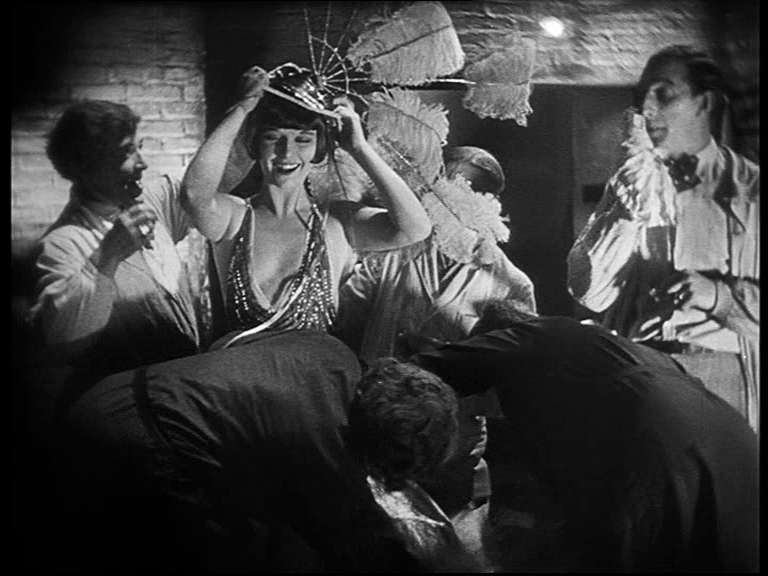
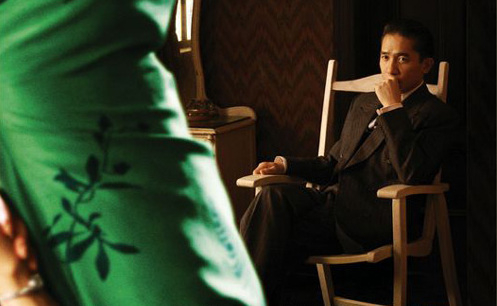
I kickstarted this blog on the fifteenth day of the last Chinese New Year with a review of the delightful Oriental-themed Kung Fu Panda. Today, on this blog’s first lunisolar anniversary, I have mahjong on the brain, having played many bouts of it in the earlier days of this festive season. To mark the occasion, let’s take a closer look at one of Lust, Caution’s most crucial scenes, an exemplar of how the movie uses mahjong to encode meanings both among its characters and to the audience. Here, we are treated to the mutual seduction of the two leads, Mrs Mai (Tang Wei) and Mr Yi (Tony Leung), as well as Mrs Yi’s canny reactions to the same.

(more…)

WALL·E vs Spirit

January 29, 2010 By: Colin Low Category: Link Roundups

In my WALL·E review, I noted this complaint:

Usually, Pixar wraps its keen observations of human foibles around the plight of their victims: neglected toys in Toy Story, unappreciated superheroes in The Incredibles, maltreated marine life in Finding Nemo, and so forth. But WALL·E’s own abandonment never grows into an issue against the humans here…

So what exactly was I expecting from Pixar? I wouldn’t have known, of all things, that the geek webcomic XKCD would provide the answer:

XKCD: Spirit

Randall Munroe, XKCD’s author, writes: “On January 26th, 2213 days into its mission, NASA declared Spirit a ’stationary research station’, expected to stay operational for several more months until the dust buildup on its solar panels forces a final shutdown.”

Tags: ,

“Crying” in Mulholland Drive

January 22, 2010 By: Colin Low Category: Capsuled Thoughts

I haven’t yet parsed (nor could I possibly) all of the mysteries and wonders of David Lynch’s Mulholland Drive after my first enraptured viewing, but how hypnotic is that scene in Club Silencio where Rebekah Del Rio sings “Llorando”, her a capella Spanish cover of Roy Orbison’s “Crying”? Her clear and tremulous voice, that creased forehead and weathered face, captured close-up over a dark background, echo more powerfully as a naked embodiment of desire than almost any musical number across the cinematic decade that followed. (And what are musical numbers meant to be but embodiments of desire?) The scene is wondrous in its simplicity, cutting between close-ups of Del Rio, weeping for a lost love, and of Naomi Watts and Laura Harring, weeping for beauty.

Mulholland Drive sustains its mystery by baring its heart in scenes like this one or Watts’ fabled audition, even when it complicates them with the futile threat of being illusory. What illusion? When Del Rio collapses as her voice plays on, or onlookers clap to Watts’ tear-choked breaths, we aren’t disappointed that “it’s all a sham”—because we remember. And so the magic persists: beyond death, beyond reality.

Mulholland Drive | 2001 | USA | Director: David Lynch | Screenplay: David Lynch | Cast: Naomi Watts, Laura Elena Harring, Rebekah Del Rio, Justin Theroux, Ann Miller

Tweeting the Movies

January 15, 2010 By: Colin Low Category: One-Liner Reviews

Here are my Twitter posts on some of the movies I caught in the past year:

District 9: Bracing as a quasi-documentary on alien immigrants, and as a horror film on unwanted transformations; opaque as an action flick.

Double Indemnity: I just don’t get classic actresses playing hysterics. c.f. Leigh in A Streetcar Named Desire, Hepburn in Long Day’s Journey into Night

Fighting: A formula film without the formula’s best parts: the sweat-soaked anticipation, the thrill of the win, or, y’know, the actual fighting.

Funny Girl: Nearly a revue meant to showcase Streisand’s talents at belting and rapid-fire line delivery; Streisand redefines stardom.

Harry Potter and the Half-Blood Prince: Potter fatigue has caught up to me; all of J.K. Rowling’s missed dramatic opportunities keep thwacking me in the face.

Indiana Jones and the Last Crusade: Sturdy pulp movie, with stars (Ford, Connery, Phoenix) that knew they were stars, and how to act as stars.

Katong Fugue: How is it that celluloid pianos so readily channel their player’s inner desires? (c.f. The Piano)

Moon: “Thoughtful scifi” for beginners: promising premise, predictable plotting.

Paper Heart: Shades of When Harry Met Sally, with clever, disciplined use of the handheld trope.

Paranormal Activity: Oscillates like Julie & Julia between its annoying and gratifying plots, but with demons (actual v boyfriend) not cooks

Public Enemies: Retreads Bonnie and Clyde, laced with the irony that even America’s Most Wanted doesn’t beat its citizens’ self-absorption.

Ratatouille: Anyone (who can reconstruct whole recipes from scratch with just a whiff) can cook.

Silkwood proves that horror movies are scarier when they feel like a part of life, especially one you haven’t the means to escape.

Taken: dooming teenagers worldwide to clampdowns on travel by their paranoid parents, who believe that kidnappers lie at every foreign turn.

There Will Be Blood score is such a keeper: each track is flavorful and distinctive! If it didn’t fit the images, that’s the movie’s fault.

Up: Apart from the vignettes of lifelong marriage… eurgh. Eurgh. Pixar at its most infantile.

The Wedding Banquet: Queer domesticity warms my soft heart.

West Side Story: (Romeo + Juliet’s plot) – (Shakespeare’s poetry) = Awful book scenes. Rita Moreno sets her scene ablaze; other songs nowhere as fiery.

You Can Count on Me: Exactly what the title says.

Tags: