
Against The Hype

Holding good movies to greater standards
Subscribe

Archive for the ‘Movies’

Tweeting the Movies

January 15, 2010 By: Colin Low Category: One-Liner Reviews

Here are my Twitter posts on some of the movies I caught in the past year:

District 9: Bracing as a quasi-documentary on alien immigrants, and as a horror film on unwanted transformations; opaque as an action flick.

Double Indemnity: I just don’t get classic actresses playing hysterics. c.f. Leigh in A Streetcar Named Desire, Hepburn in Long Day’s Journey into Night

Fighting: A formula film without the formula’s best parts: the sweat-soaked anticipation, the thrill of the win, or, y’know, the actual fighting.

Funny Girl: Nearly a revue meant to showcase Streisand’s talents at belting and rapid-fire line delivery; Streisand redefines stardom.

Harry Potter and the Half-Blood Prince: Potter fatigue has caught up to me; all of J.K. Rowling’s missed dramatic opportunities keep thwacking me in the face.

Indiana Jones and the Last Crusade: Sturdy pulp movie, with stars (Ford, Connery, Phoenix) that knew they were stars, and how to act as stars.

Katong Fugue: How is it that celluloid pianos so readily channel their player’s inner desires? (c.f. The Piano)

Moon: “Thoughtful scifi” for beginners: promising premise, predictable plotting.

Paper Heart: Shades of When Harry Met Sally, with clever, disciplined use of the handheld trope.

Paranormal Activity: Oscillates like Julie & Julia between its annoying and gratifying plots, but with demons (actual v boyfriend) not cooks

Public Enemies: Retreads Bonnie and Clyde, laced with the irony that even America’s Most Wanted doesn’t beat its citizens’ self-absorption.

Ratatouille: Anyone (who can reconstruct whole recipes from scratch with just a whiff) can cook.

Silkwood proves that horror movies are scarier when they feel like a part of life, especially one you haven’t the means to escape.

Taken: dooming teenagers worldwide to clampdowns on travel by their paranoid parents, who believe that kidnappers lie at every foreign turn.

There Will Be Blood score is such a keeper: each track is flavorful and distinctive! If it didn’t fit the images, that’s the movie’s fault.

Up: Apart from the vignettes of lifelong marriage… eurgh. Eurgh. Pixar at its most infantile.

The Wedding Banquet: Queer domesticity warms my soft heart.

West Side Story: (Romeo + Juliet’s plot) – (Shakespeare’s poetry) = Awful book scenes. Rita Moreno sets her scene ablaze; other songs nowhere as fiery.

You Can Count on Me: Exactly what the title says.

Tags:

A Toast to Singapore Film!

December 19, 2009 By: Colin Low Category: Announcements, Movies

SINdie

I have joined the writing team at SINdie, short for Singapore Independent Films Only, which I think amply covers the scope of the blog. “Independent”, though, is pretty redundant at this point, since we’re long past the short-lived post-war era where Singapore had a thriving studio film industry. For my debut reviews, I attended a night screening of 26 short films from aspiring local filmmakers at the Nanyang Technological University’s School of Art, Design and Media, though I had to bow out after sixteen films to catch a public bus home (not to mention that a consecutive run of about five films before I left made a good case for leaving).

Here’s a snippet from my favourite piece of the lot, a joint review of four of the shorts:

While SINdie’s regular policy is to give each film its own post, I’ve packaged together these four films, which span three languages (English, Mandarin, Tamil*), because they suggest a regrettable tendency for local filmmakers to receive their storytelling and scoring influences from charity show montages or social awareness ads.
Sure, After Skool, Shifting Feet, Father and Ananthi differ in the precision of their cinematography, editing and makeup, which are especially strong and steady in those last two films. But they’re all prone to breaking out the “touching” melodies at key moments, and in all their stories, one character commits an unfeeling transgression against another, only to have a later turnaround scene that casts this character in a less stonyhearted light:
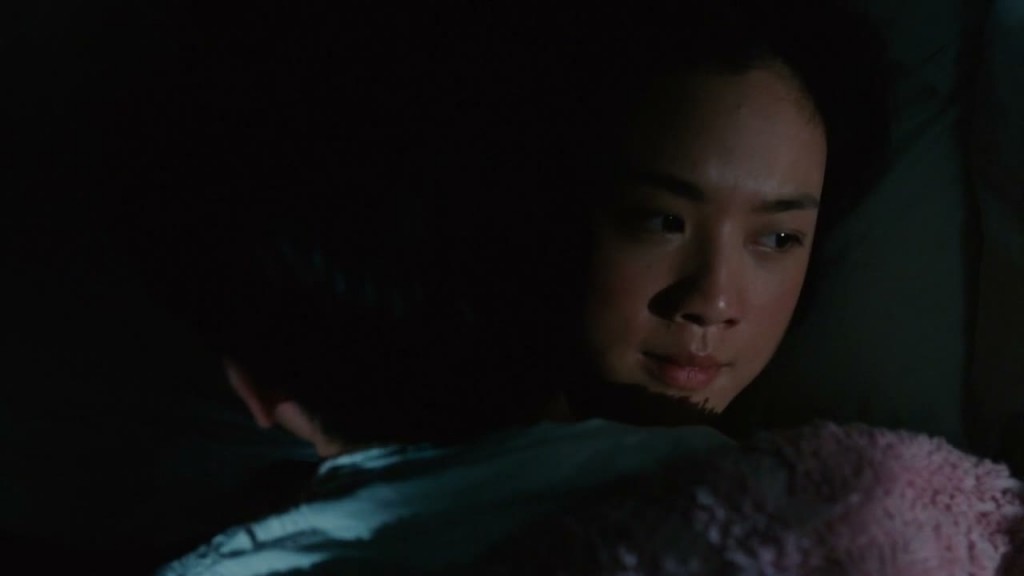
After Skool: A bunch of bullies beats a girl bloody (seriously, she’s like marinara) for having an old auntie’s photo in her pendant, only to have one of them soften after she picks up the fallen pendant, realising its significance as she sits by the unconscious girl’s bedside**.
Shifting Feet: A guy pooh-poohs his girlfriend’s dancing aspirations, only to join her in a waltz after her extended ballet scene (and boy, is it extended).

While SINdie’s regular policy is to give each film its own post, I’ve packaged together these four films, which span three languages (English, Mandarin, Tamil), because they suggest a regrettable tendency for local filmmakers to receive their storytelling and scoring influences from charity show montages or social awareness ads.

Sure, After Skool, Shifting Feet, Father and Ananthi differ in the precision of their cinematography, editing and makeup, which are especially strong and steady in those last two films. But they’re all prone to breaking out the “touching” melodies at key moments, and in all their stories, one character commits an unfeeling transgression against another, only to have a later turnaround scene that casts this character in a less stonyhearted light:

After Skool: A bunch of bullies beats a girl bloody (seriously, she’s like marinara) for having an old auntie’s photo in her pendant, only to have one of them soften after she picks up the fallen pendant, realising its significance as she sits by the unconscious girl’s bedside… (Full review)

It’s great at SINdie: not only am I already getting a much better feel of local film in just my first two assigned screenings, we’re also the only Singaporean blog to focus explicitly on homegrown films, which means that the filmmakers themselves often look to our reviews for encouragement and critique (though, given my hard-assed expectations of formal incisiveness, they might often find more of the latter from me).

I’m here to serve!

Top Movies of the Decade

November 17, 2009 By: Colin Low Category: One-Liner Reviews

Unlike most critics, I don’t get to watch a whole slew of movies as they are released. I have the luxury, though, of knowing critics whose tastes dovetail with mine enough that I tend to watch good movies (or at least interesting ones) whenever I rent them. So while most critics are now gearing up to write their personal Top 100 lists for this decade’s movies, I’ll be taking up the opposite challenge of watching all the movies listed by the critics I trust most, and writing one-liner comments on each. Beginning with Tim Robey of the Telegraph, and adding other critics as they post their lists, I’ll slowly make my way through their recommendations and rank them by my own tastes. To start:

Movies I’ve seen so far from these lists (ranked in descending order):
eternal-sunshine

  1. Eternal Sunshine of the Spotless Mind (‘04): A patchwork quilt of relationship truths and clever scifi, culminating in the wisest romantic insight since Annie Hall
  2. The Incredibles (‘04): Deft, rocket-paced flexing of superheroes into crises of identity and family (full review)
  3. Erin Brockovich (‘00): Finally, a star vehicle that fully capitalises on Julia Roberts’ prickly edges
  4. Julia (‘08): You won’t find a more sober and disciplined director-actor pair playing so drunk, desperate and out-of-control
  5. Birth (‘04): Nicole Kidman thrives in close-ups and in being profoundly disturbed; this movie indulges her
  6. The Bourne Supremacy (‘04): Whip-smart, breakneck spy thriller that sustains Jason Bourne’s clear-headed urgency while suffused with the pain of his loss
  7. The Lord of the Rings: The Fellowship of the Ring (‘01): Epic worldcrafting, with actors and designers attuned to the demands of old-school myth
  8. In the Mood for Love (‘00): Aestheticised within an inch of its life, which fits brilliantly its tale of yearning and suffocation in ’60s Hong Kong
  9. Before Sunset (‘04): Sadness and self-absorption jostle in this narrow Parisian sequel to the gloriously expansive and romantic predecessor
  10. Synecdoche, New York (‘08): A heartfelt meditation on self-centredness and ageing; relies on your capacity for deadpan humor, sadsack-watching and between-the-lines editing
  11. Kill Bill Vol 1 (‘03): Candy-coloured pop fantasia of actresses and Japanese action movies, with a drop in mid-film momentum from Uma’s ineptness with bimbo humour
  12. The Hurt Locker (‘09): More realistic, tense sequences of warfare than you’ll find elsewhere, though the soldiers teeter a bit towards broad enigma
  13. There Will Be Blood (‘07): Fiery tempests wrought from the earth’s depths, Jonny Greenwood’s alien strings, and Daniel Day-Lewis’ oil baron. But things can get un-illuminatingly loud
  14. Memento (‘00): Gimmicky collage of noirish scenes, blank-slate grieving and emotional manipulations held fast by a punchy existential twist
  15. Sideways (‘04): Depends on your mileage for sadsacks, especially when they’re insulated by narrative perks, e.g. sex with the luminous Virginia Madsen
  16. Adaptation (‘02): Depends on your mileage for sadsacks, especially when they’re insulated by narrative perks, e.g. being fictional
  17. No Country for Old Men (‘07): Cleaves too easily into standalone scenes of well-edited tension and recycled caricature-humour to truly earn its mopey “bleak” ending
  18. King Kong (‘05): Fanboy-wank remake bloated with CGI, wrapped around a cross-species romantic core that should have ventured beyond mere gestures at empathy
  19. Mysterious Skin (‘04): Alternates between its boring and its exploitative plots, though Joseph Gordon-Levitt’s hustler gets a few emotionally raw/tender encounters
  20. Hunger (‘08): I’m tired of arthouse exploitation as an excuse for male nudity, or vice versa; hurling shit-stained walls and clichéd police brutality at me doesn’t help

(The movies I have yet to see, or don’t remember enough to write about, can be found after the jump.)

(more…)

Review: (500) Days of Summer

November 05, 2009 By: Colin Low Category: Full Essays

500-days-of-summer

Despite the title, (500) Days of Summer is not about a sunny romance, as the narrator is quick to warn you. “This is not a love story,” he intones, and he’s probably referring to the routine heartbreak in movies that accompanies any belief in love. But he’s also right about the relationship at this movie’s core not being about love. See, there are two kinds of romantic comedies in this world: the ones that divide people into Men and Women, and the ones that don’t. (500) Days of Summer hastily identifies itself as one of the former, in a kitschy montage that narrates how Joseph Gordon-Levitt (the Man) believes in love, and how Zooey Deschanel (the Woman) turns heads wherever she goes. How are you supposed to react to a montage like that? He’s the guy of this movie, and she’s the girl: they’re going to fall in love.

Except they don’t. From Day (1) that Deschanel’s character waltzes into mopey office-cubicle hipster Tom’s life, his eyes follow her in slow-mo as it dawns upon him that she’s the girl of his dreams. Days later, when she identifies The Smiths through his headphones and gushes about the band, that’s confirms it. So when she keeps not asking him out, and later tells him that she isn’t looking for anything serious, it floats right past Tom’s rose-tinted sensors even as we’re yelling in exasperation at the movie screen, and things go predictably downhill from there. (500) Days of Summer has been dubbed an anti-rom-com, but it deserves that label not because the two leads don’t end up together, but because it’s an unromantic study of infatuation at its most blinkered.

(more…)

Besotted with Stars: The Problem with WALL·E

October 09, 2009 By: Colin Low Category: Full Essays

This piece was written as an entry for Pixar Week over at The House Next Door. For other critical analyses of Pixar’s work, please head over there and have a look!

walle2

For all that Pixar loves to celebrate its underdogs, WALL·E marks the first (and so far, only) time the studio has named an entire movie after its protagonist, neither effacing him into part of a wider community (Toy Story, A Bug’s Life, Monsters Inc., The Incredibles, Cars) or a central mission (Finding Nemo, Ratatouille, Up). That WALL·E’s name is shared by his peers and short for his mission—”Waste Allocation Load Lifter · Earth-class”—barely counts against this claim, since the acronym is pronounced like a regular human name; the movie is built on the premise that he is the last of his kind; and the essential pleasures of WALL·E do not spring from his assigned mission but in the tangents he chases beyond it. Though the break in titling scheme alone implies it, we can tell from the raves accompanying the movie’s prologue—in which WALL·E is only character we encounter, save for a curly-feelered roach—that Pixar invests much of WALL·E’s success on the cult of personality that forms around its title character.

And what a personality! Binocular eyes that pivot as though they were brows; a stocky frame into which he can retract like a tortoise; a symphony of blips, squeaks and squalls: all these feats of character design conspire to make WALL·E as expressive as a droid could realistically be. Left to clean up a trash-strewn Earth, WALL·E splits his time between compacting trash and unearthing lost reminders of humanity’s technological gifts from the rubble. He has a child’s fascination with simple interactive objects: it is endearing to watch him handle sporks, hubcaps, whisks, fire extinguishers and even brassiere in unexpected ways (or bubble wrap in an expected, universally beloved way), collecting and playing with them as though they were the peaks of our civilisation. Maybe they are. (more…)